Projects

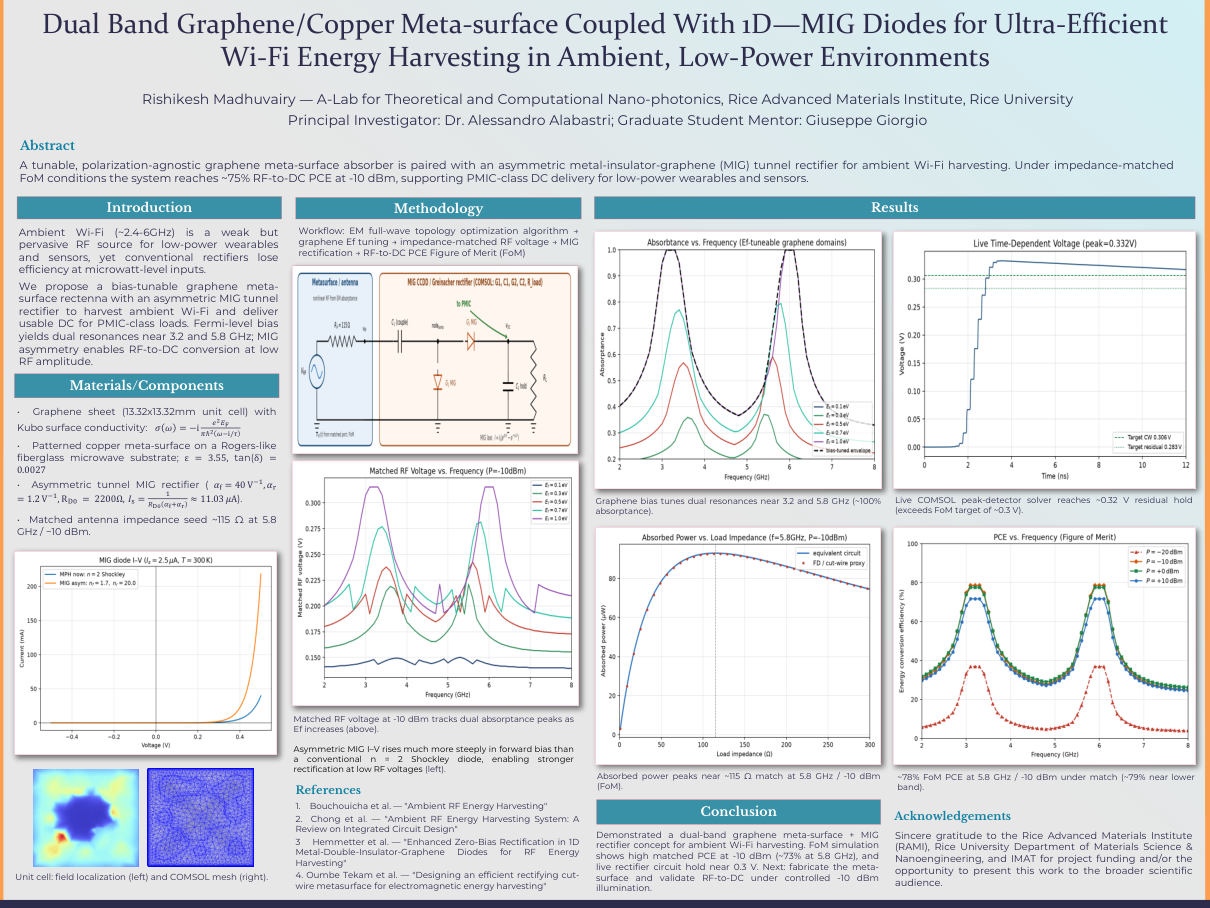
Poster titled Dual Band Graphene/Copper Meta-surface Coupled With 1D-MIG Diodes for Ultra-Efficient Wi-Fi Energy Harvesting.
The IMAT poster. Open it for the full figure set.
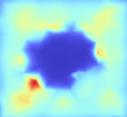
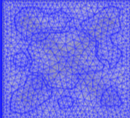
Field plot from the Wi-Fi harvesting simulation. Mesh from the Wi-Fi harvesting simulation.

01 IMAT 2026 · Third place

Squeezing usable power out of the Wi-Fi floating around your room

  • 3rdIMAT 2026, Québec
  • ~100%EM absorption
  • 79%RF-DC power conversion efficiency at −10 dBm
  • 0.32 Vlive transient peak

Your router is constantly blasting energy somewhere between 2.4 and 6 GHz, and almost all of it goes to waste. Ambient Wi-Fi is a weak source, and a conventional diode gives up at microwatt inputs. During the 2026 RAMI fellowship in Dr. Alessandro Alabastri’s A-Lab, with Giuseppe Giorgio, I designed a tunable, polarization-agnostic graphene/copper metasurface and paired it with an asymmetric metal-insulator-graphene tunnel rectifier.

My COMSOL simulation, aided by a density topology optimization algorithm, achieved peak time-dependent voltage and theoretical power conversion efficiency that outcompete every theoretical benchmark in the RF harvesting space. This is PMIC-level power that can operate wearable sensors, microelectronics for biomedical implants, and smart health monitors. En route to fabricating a working prototype for the TEX-E Fellowship and the NASA Orbit Challenge!
02 Purdue AI Research Showcase · First place

A wafer map model small enough to live on the tool

  • 1stPurdue AI Research Showcase
  • 72.7%accuracy, up 12.7 points
  • 800,000SEM micrograph training set

Wafer defects cost semiconductor lines millions of dollars a year, and the networks that find the pattern are usually too heavy to sit on the inspection tool. With Rahul Prabhu, I built one that can. The vision backbone is about 101,000 parameters. We fused it with eight descriptors taken from how defects actually form: radial mean and spread, directional entropy, aspect ratio, fail fraction, and spatial failure density.

On the WM-811K benchmark, a vision baseline lands at 60.0% accuracy and a 0.615 weighted F1. Our full-fusion model reaches 72.7% and 0.728. That is a 12.7-point increase for only a 3.3% increase in size. As far as we can tell, this is the first systematic ablation on a network small enough for edge compatibility with wafer inspection tools.

Our model could further be integrated into a yield intelligence platform that can tell quality control engineers where and how, spatially speaking, defects are arising in silicon wafers.

03 Rice Urban Sustainability Hackathon · $10,000

Pulse, a command suite for the resource shock of a mega-event

  • $10,000hackathon prize at Rice
  • 11World Cup host cities
  • 20,569businesses on the map

In 2022, Beijing diverted almost 200 million gallons from a scarce reservoir onto a dry riverbed so two Winter Olympic venues could make snow. Mega-events still do this. They just hide it in hotels, kitchens, and grocery stores. For the 2026 World Cup we asked two questions. Which of the 11 U.S. host cities take the hardest hit on energy, water, and food, and what can a city actually do about it?

Pulse is the suite we built so a tournament organizer, a city planner, or a hotel group can answer that without a spreadsheet of false precision. Card activity for 20,569 businesses, from December 2019 through December 2024, is turned into energy, water, and carbon, down to district clusters. Our scenario lab lets intervention strategists and venue/resource planners sandbox their sustainability tactics with live visibility of their impacts on an evolving spatial map. Cities are compared on a normalized readiness score that does not punish a large city just for being large.

Had a blast building this concept up with some of my closest friends, and the $10,000 was a bonus! The same machinery is aimed next at other tournaments: Wimbledon, a Cricket World Cup, an Olympics.

decision PRD ticket code design test

04 Co-founder · live

QuarkMemory, memory for every decision in the software

  • 2Enterprise LOIs
  • 7pilots
  • 120msretrieval

I co-founded QuarkMemory. Every requirement, function, ticket, and design note is a quark: small, and constantly changing state. The reason it changed usually lives in a thread nobody will reopen. Documentation loses to shipping, and a search box over stale docs is not institutional memory.

QuarkMemory keeps a persistent record of the decisions attached to each piece of the product. What was decided, what it constrains, and what contradicts it. An agent drafting a PRD or a pull request is held to that history, and a review pass can surface the constraint before a bad change reaches a senior engineer.

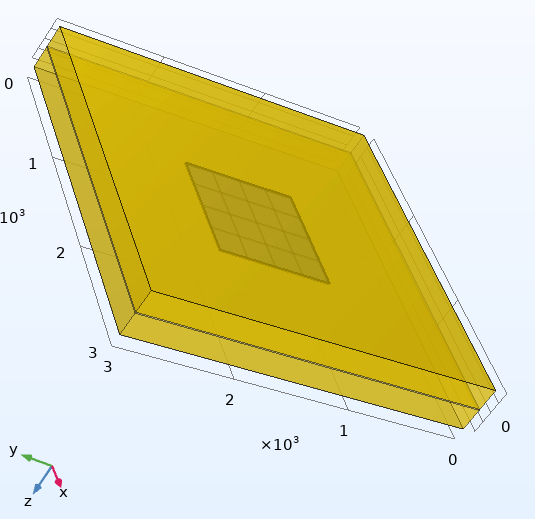
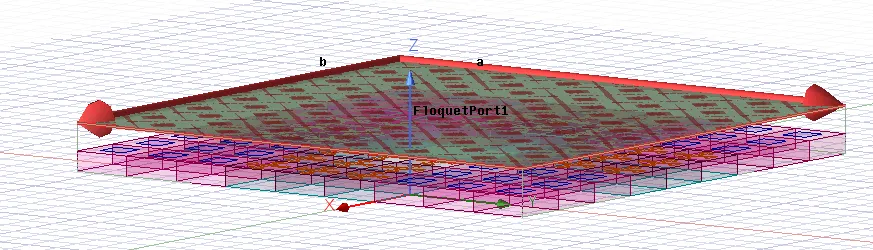
Periodic electromagnetic unit cell with a Floquet port, from the antireflection coating simulations.
Periodic unit cell from the HFSS builds.

05 Indian Institute of Science · 2024

My attempt at breaking the ceiling on solar PV absorptive potential

I had a fun stint at India's top research university, Indian Institute of Science, back in 2024. I learned more about nanophotonics, electrodynamics and advanced light-matter interactions over one summer than I had learned high school physics in 2 years. My second time in the weeds with Ansys HFSS and Ansys Lumerical software yielded a full-fledged theoretical paper that potentially revolutionizes hybrid solar PV harvesting, all thanks to materials science (with a few realistic limitations, haha).

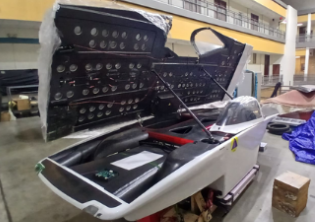
Solar race car in the Rice shop with the canopy open and the battery pack visible in the nose.
The car in the shop, canopy open.

06 Rice Electric Vehicle

A steel and carbon chassis, and the paperwork to move it

Building a 4130 steel, monocoque carbon fibre chassis and a lithium-iron phosphate 11x9 battery pack for my college (Rice University) solar racing team. Also getting waist-deep in operations, logistics sponsorship and brokerage deals with the top electric vehicle alliances in Houston. First time I ever did customs law was while drafting a Power of Attorney to ship this behemoth of a racecar across the US-Canada border!

Layered rectangular cavity model used in the molybdenum ditelluride frequency-domain work.
Cavity geometry from the Zhu Group modeling.

07 Zhu Group · Rice

Frequency-domain response of a molybdenum ditelluride cavity

Learning COMSOL with a professional license for the first time ever in college, with the Zhu Group at Rice. It's tough, but in pursuit of a larger goal of discovering the frequency-domain responses of a molybdenum ditelluride cavity for quantum computing applications!

08 Lithium supply chains

The ethics hiding inside a battery bill of materials

My uncle works as a sustainable energy lead for the World Bank. It was through him I learned about the humanitarian atrocities that are overlooked for the sake of critical materials extraction in all parts of the world. To be specific, the lithium ion battery technology supply chain is riddled with moral defects, from social inequity to adverse trickle-down economics. I explore all of that in this paper.